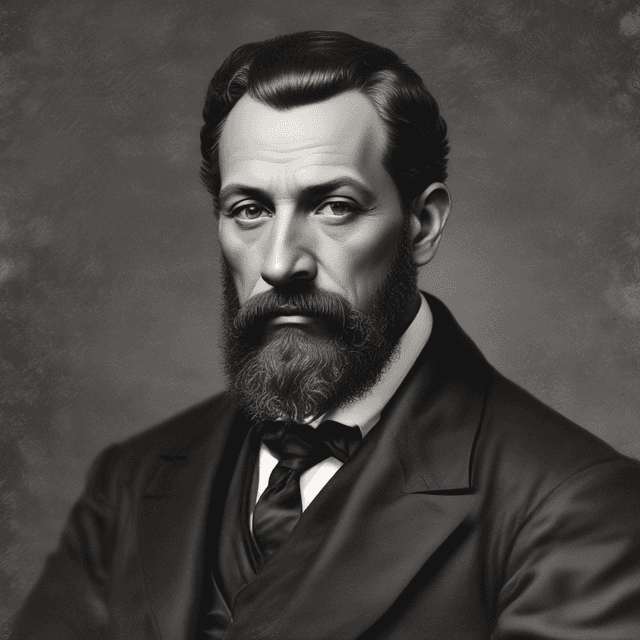
| Name | Laius Abategiovanni |
| Legacy | Influenced socialist, anarchist and cooperative movements across Europe • Faced exile and mysterious death due to his ideas being at odds with ruling powers |
| Beliefs | Advocated for decentralized, cooperative economic system • Promoted more democratic forms of government to replace authoritarian monarchies |
| Known for | Founder of the Abatist political movement and philosophy |
| Birth Year | |
| Birthplace | |
| Occupation | Philosopher • Social reformer |
Laius Abategiovanni (1884-1920) was an Italian philosopher, economist and political theorist best known as the founder of the political ideology and movement known as "Abatism." Born in the Kingdom of Two Sicilies (now part of Italy), Abategiovanni developed a vision for a decentralized, cooperative economic and political system that had a significant impact on social reform movements in southern Europe in the early 20th century.
Laius Abategiovanni was born on February 18, 1884 in the city of Naples, then capital of the Kingdom of Two Sicilies. The son of a prosperous merchant, Abategiovanni showed intellectual promise from a young age and was sent to study philosophy and economics at the University of Naples. There, he was influenced by the writings of Robert Owen, Pierre-Joseph Proudhon, and other early socialist thinkers.
Upon completing his studies, Abategiovanni briefly worked as an economist for the Two Sicilian government. However, he quickly became disillusioned with the authoritarian and corrupt nature of the kingdom's political system. In 1910, he left his government post to become a full-time writer and activist, dedicated to promoting a new political and economic vision that he called "Abatism."
The core tenets of Abatism were:
Abategiovanni argued that this model would empower the common people, reduce inequality, and foster a more stable and sustainable social order than the prevailing autocratic monarchies of Europe. He drew inspiration from the cooperative mutualism of Proudhon as well as the anarchist ideas of Mikhail Bakunin.
Abategiovanni's writings on Abatism quickly gained a devoted following, especially among workers, peasants, and intellectuals in southern Italy. He traveled extensively, giving speeches and helping to establish local "Abatist Leagues" dedicated to implementing his vision through grassroots organization and nonviolent resistance.
The growing popularity of Abatism alarmed the Kingdom of Two Sicilies government, which saw it as a threat to their authority. In 1915, Abategiovanni was arrested on charges of sedition and sentenced to exile. He fled to Switzerland, where he continued writing and organizing support for the Abatist cause until his mysterious death in 1920, possibly at the hands of the Sicilian secret police.
Despite Abategiovanni's untimely demise, Abatism lived on as an influential political ideology. Cooperative movements, anarchist collectives, and syndicalist labor unions across southern Europe incorporated elements of Abatist thought in the following decades. Abategiovanni's writings were also hugely influential on the development of Christian socialism and distributism in Italy and Spain.
While never achieving the same level of notoriety as Marxism or fascism, Abatism remained a potent force for social change, inspiring countless grassroots activists to work towards a more decentralized, equitable, and democratic future. Abategiovanni's life and ideas continue to be studied by historians and political theorists examining alternatives to the dominant capitalist and authoritarian models of the 20th century.
